
Community Stories from BSY
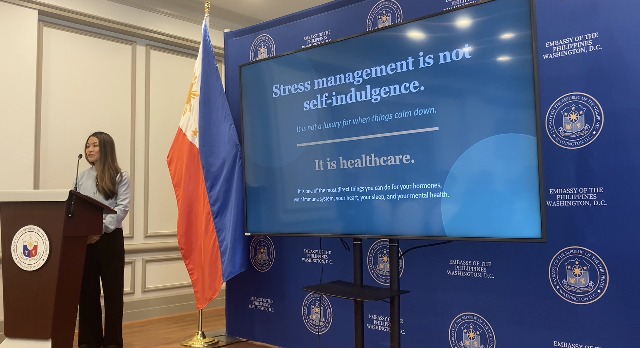
Kristine Reyes Erickson speaks at the Embassy of the Philippines in Washington, D.C. on March 18th, 2026, at their Forum on Stress Management and Women’s Health. She represented Bluebird Sky Yoga and shared mindfulness practices to help everyone, especially women, manage stress.
Stress and Wellness Practices- A Talk at the Embassy of the Philippines
Magandang hapon po sa inyong lahat! Good afternoon everyone! Happy National Women's History Month! I'm Kristine. I want to begin by thanking Ambassador Romualdez, for welcoming us here today, and Fides for the kind invitation to speak with this community.
I'm a Filipina immigrant, a mom, a wife, and I own Bluebird Sky Yoga here in Washington, D.C., where I teach Ashtanga yoga and mindfulness.
Honestly, I think I've always been an entrepreneur. Growing up, I had a sari-sari shop in our house. My neighbors and brothers could come buy candy, little trinkets, and I made my own lottery tickets by hand. One time my brother bought one for 5 cents and looked me straight in the eyes and said, "this better be a winner." My family- my parents, brothers and their families are all still in Los Angeles, California where we immigrated to when we arrived in the 1980s. Closer than the Philippines, but still very far away.
I like to think that what I do now is still that. I'm still making things and hoping they feel like a win for the people who show up. I'm still serving my community.
Section I: Understanding Stress and Its Impacts
I was asked to speak about stress today. But before we dive in, I want to ask you something.
How many of you, when someone asks how you're doing, say "I'm fine", even when you're not?
Yeah. Me too. We're very good at saying fine.
The thing is, our bodies are not always fine. They're keeping score even when we're not. And that's what I want to talk about today… not in a scary way, but in a way that is actually good to know, because understanding what stress is doing inside you is the first step to doing something about it.
So let's start simple.
What is stress, really?
Stress is not a character flaw. It's not a weakness. It's your nervous system doing exactly what it was designed to do. When your brain perceives a threat, and I want you to notice I said perceives, not encounters. It triggers what we call the fight or flight response. Hormones flood your system, your heart rate goes up, your muscles tighten, your digestion slows down, your breathing gets shallow. Your body is preparing you to either fight something or run from it.
That system saved our ancestors from real danger- wild boar, harsh elements, threats they could see and touch. It's a smart security system, actually.
The problem is that your nervous system can't tell the difference between a wild animal and a really difficult email. It can't distinguish between physical danger and a pile of bills, or a teenager who won't talk to you, or worrying about someone back home in the Philippines. To your body, stress is stress. And when that alarm system is activated over and over, day after day, without ever fully turning off, that's when we start to have a problem.
What does chronic stress actually feel like?
I am going to name some symptoms, and I want you to notice if any of these feel familiar. Many of us have normalized feeling this way that we may not recognize it as high stress.
Think of it like slowly turning up the heat in a room. You don't notice how hot it's gotten because you adjusted along the way. Chronic stress works the same way. It creeps up gradually until high stress becomes your new normal and you've simply forgotten what low stress feels like.
Some symptoms of stress might look like exhaustion that sleep doesn't fix. Waking up at two or three in the morning with your mind already running. Getting sick more often than you used to. Digestive issues like bloating, stomach upset, that knot in your belly that never fully goes away. Forgetting things. Feeling emotionally flat, or on the other end, feeling like everything is just a little too much. Snapping at the people you love and then feeling terrible about it afterward. Liit ng pasensya, laki ng pagmamahal.
These are not just bad days. These are signs that your body is asking for help.
Let's talk about stress and productivity.
Now here's something that might surprise you. Short term stress actually helps us perform. A deadline, a challenge, a high-stakes moment, that stress response sharpens our focus. That's useful, and we need that.
But chronic stress, the kind that never turns off, does the opposite. It impairs our memory, our decision-making, our creativity, and our focus. So if you've been feeling like you're working harder than ever but getting less done, or feeling foggy when you used to feel sharp, that may be your nervous system running on empty.
And for us, as women, there's more.
Research shows that women experience stress differently than men, and we tend to respond to it differently too. While men often move toward fight or flight, women more commonly move toward what researchers call tend and befriend- we take care of others, we reach out, we hold things together for everyone around us. Which is beautiful. And also exhausting.
Women's stress often doesn't look like the classic picture. It shows up as anxiety, as hormonal changes, as autoimmune flares, as insomnia, as that low hum of worry that just never fully goes quiet.
And for us who grew up Filipina, there's a word I think about when I’m stressed. Pagtitiis. Endurance. Suffering quietly. Keep going. I saw this in my own mother, who worked multiple jobs when we first came to the US, who carried so much and called it normal. That spirit is part of why we are strong.
But it can also mean we wait too long to take care of ourselves, because many of us, women and men, were raised, directly or indirectly, to put family and community first. And there is so much beauty in that. It is one of the things I love most about our culture. But somewhere along the way, caring for others became a reason to forget ourselves entirely. They don't have to be in conflict. And I think somewhere in us, we already know that. We just need to give ourselves permission to act on it. That's what I hope today gives you.
Section II: Women's Health
I want to stay with us for a few minutes- specifically with our bodies, and what they carry.
We just talked about what stress does in general. Now I want to talk about what it does to us, to women, over time, when we don't address it. Not to alarm, but because many of us have been disconnected from our bodies for so long that we've stopped hearing what they're trying to tell us.
Your body is always communicating. Always. The question is whether we've learned to listen, or whether we've gotten so good at pushing through that we've turned the volume all the way down.
Chronic stress, the kind that lives in the background of your life, affects women's health in some very specific ways.
It disrupts our hormones. Cortisol, which is our primary stress hormone, directly interferes with estrogen and progesterone. This can affect our menstrual cycles, our fertility, our mood, and how we experience perimenopause and menopause. Hormonal imbalance doesn't always announce itself dramatically, sometimes it's just feeling off, feeling unlike yourself, and not being able to explain why.
Chronic stress affects our sleep. And I don't just mean getting fewer hours. Chronic stress changes the quality of sleep. We may be in bed for seven or eight hours and still wake up depleted, because our nervous system never fully shuts down through the night.
Chronic stress suppresses our immune system. Women are already more prone to autoimmune conditions than men, conditions like thyroid disease, lupus, rheumatoid arthritis. Chronic stress is one of the factors that can trigger or worsen these conditions. If you've been getting sick more often, if something that was manageable has been flaring up, stress is worth looking at as a contributing factor.
It affects our hearts. Heart disease remains the leading cause of death among women worldwide, and chronic stress is a significant risk factor. Yet it's still underdiagnosed in women because our symptoms often present differently than they do in men. Unlike the crushing chest pain we typically associate with heart attacks, women often experience less obvious warning signs- jaw or back pain, nausea, extreme fatigue, or shortness of breath. Symptoms so easily mistaken for anxiety or indigestion that they are frequently overlooked by both patients and medical providers.
And chronic stress affects our mental health. Anxiety and depression are twice as common in women as in men. Twice. That's not because we're weaker. It's because of the particular combination of biology, hormones, and the invisible labor we carry.
Speaking of invisible labor.
There is a health cost to always being the one who remembers, manages, worries, and holds everyone else together, and we don't talk about it nearly enough.
Many of us in this room are that person. We manage the household, the schedules, the emotional needs of our children and partners and sometimes our parents too. We track what's in the refrigerator and what's happening at school and whether our partners remembered to eat lunch. We do this while also working, while also showing up, while also being far from the people back home who would otherwise share this load with us.
That is a full-time job that no one hired us for and no one is reviewing our performance on, except us, internally, at two in the morning.
And I want to say this clearly, invisible labor is not unique to our culture. But it is amplified for immigrant women, for women carrying responsibility across two countries, two time zones, two sets of expectations. The weight doesn't just double. Sometimes it compounds.
That labor lives in the body felt as tension in the shoulders and jaw, or a nervous system that never fully rests because it's always waiting for something to come up.
For those of you in the embassy community specifically…
there is an added layer that I think is worth acknowledging. Living and working far from home, navigating professional life in a second culture, carrying responsibility for family members both here and in the Philippines. This is its own particular kind of stress. The pride of representing your country, the pressure of doing it well, the grief sometimes of distance. These things are real, and they belong in any honest conversation about health, and women's health specifically.
So what do I want you to take from this?
Just this: stress management is not self-indulgence. It is not a luxury for when things calm down. It is healthcare. It is one of the most direct things you can do for your hormones, your immune system, your heart, your sleep, and your mental health.
And the practices that help are not complicated. You don't need a studio or a gym membership or an hour a day. You need a few minutes and a belief that you are worth those minutes.
Which brings me to what we're going to do next.
Section III: Practical Stress Management Techniques
Okay. We've talked about what stress is and what it does. Now we're going to actually do something about it, right now, in this room, together.
You don't need a yoga mat. You don't need experience. You don't need to be flexible or anything other than willing to try.
What we're going to do in the next few minutes is work directly with your nervous system. The breath is the only function in your body that is both automatic and fully within your conscious control. That makes it the most powerful tool you have for shifting your state.
So let's begin.
Part 1: Arriving, Grounding in the Body ~1 minute
I'd like to invite you to sit comfortably in your chair. Both feet flat on the floor or cross your ankles. Scoot up in your chair so you feel your feet are grounded. Hands resting in your lap or on your thighs, palms facing up or down, whatever feels natural.
If you're comfortable closing your eyes, please do. If not, let your gaze soften toward the floor a few feet in front of you. There's no wrong way to be here. Just be here for a few seconds.
Notice that you arrived here today. You made time for this.
Feel the weight of your body in the chair. The chair is supporting you. You don't have to do much to hold yourself up right now.
Feel your feet on the floor. That contact… your feet, the floor… is real. You are here and you are connected to the earth beneath you.
Take one natural breath in through your nose... and let it go.
One more. Just breathing. Just arriving.
Part 2: Extended Exhale Breathwork ~3 minutes
Now we're going to work with the breath in a specific way. I'll explain why as we go.
When you extend your exhale longer than your inhale, you activate the parasympathetic nervous system, the part of your nervous system responsible for rest, digestion, calm, and recovery. In other words, the exhale is your body's built-in off switch for the stress response.
Here's what we'll do. Inhale for four counts. Then exhale for six to eight counts. That's it.
Let me guide you.
Inhale through your nose... two... three... four... And exhale... two... three... four... five... six... let it all go.
Again. Inhale... two... three... four... Exhale... two... three... four... five... six... seven...
One more time. Inhale... two... three... four... And a long, slow exhale... two... three... four... five... six... seven... eight.
Now let your breath return to its natural rhythm. Just notice. Does it feel different than when we started?
We'll do a few more rounds on your own, counting in your head. Inhale for four, exhale for six to eight. You set the pace now.
[allow 3–4 natural breath cycles in silence]
Good. You just turned down your stress response. And you can do that anywhere- at your desk, in your car, before a difficult conversation, at two in the morning when your mind won't stop. Five rounds of this breath and your body begins to shift.
Part 3: Body Scan- Noticing and Releasing ~2 minutes
Now we're going to move our awareness through the body. This method is called a body scan. This is not about fixing anything. Just noticing. Awareness itself is healing.
Bring your attention to your jaw. Is it tight? Clenched? Let it soften. Let your teeth part slightly. Let the muscles around your eyes relax.
Move your attention to your shoulders. Where are they? Are they up near your ears? Let them drop. Let them be heavy. You don't have to carry anything right now.
Your hands. Are they gripping? Let them open. Let your fingers be soft.
Your belly. We hold so much here. See if you can breathe into your belly. Let it expand on the inhale, soften on the exhale. Let it be a little rounder than you usually allow.
And just rest here for a moment. Whole body soft. Breath easy.
Part 4: Gentle Chair Movement ~3 minutes
Let's bring a little gentle movement in. Open your eyes softly if they were closed. We're going to wake the body up just a little. Nothing complicated, nothing that requires any flexibility or experience. Just you, your chair, and a few moments to arrive fully.
We'll start with the neck. Slowly drop your right ear toward your right shoulder. Don't force it, just let gravity do the work. Breathe here.
Slowly come back to center, and drop the left ear toward the left shoulder. Breathe.
Come back to center.
Now let's do something a little playful. Gently roll your shoulders forward, up toward your ears, like you're trying to touch them, and then back and then down. Forward, up, back, and down. Let's do that two more times together.
Good. Now reverse it. Back, up, forward, and down. Like you're drawing a little circle with your shoulders. One more time.
Notice how much tension we hold right there without even realizing it.
Now let's wake up the spine. Sit up tall, take a breath in, and as you exhale, give yourself a big hug, wrap your arms around your shoulders and let your upper back round gently. Like you're giving yourself the hug you probably needed today.
Breathe into your upper back. That space between your shoulder blades that never gets any attention.
Now slowly unwind, sit tall, and roll your shoulders back one more time.
Now let's bring some energy down into the hands. Shake them out gently, yes, just shake them, it's allowed.
Now interlace your fingers, turn your palms away from you, and stretch your arms forward. Feel the stretch across the upper back and wrists. Breathe in.
Release. Let your hands rest in your lap.
Now place both hands over your heart. Feel the warmth of your own hands. Feel, if you can, your heartbeat.
This heart has been beating for you your whole life. Without asking anything in return. Just beating. Just keeping you here.
Part 5: Closing — Loving Kindness ~1 minute
Let's close with something simple and powerful, a loving-kindness meditation that dates back to 2500 years. The most important part is that you start with focusing on yourself.
Let's begin. Quietly, or if you'd like, silently repeat after me in your heart:
May I be well. [pause] May I be at peace. [pause] May I be free from suffering. [pause] May I be happy. [pause]
And now, thinking of someone you love:
May you be well. [pause] May you be at peace. [pause] May you be free from suffering. [pause] May you be happy.
When you're ready, take a deeper breath in... and let it go. Gently blink your eyes open if they are closed. Take a moment before you move. Notice how you feel.
Thank you for giving yourself that time.
CLOSING
What you just experienced, that whole sequence, took less than ten minutes. And you can do pieces of it anywhere. The breath alone, the extended exhale, takes thirty seconds and you can do it before you walk into a meeting, before you make a difficult phone call, before you go to sleep.
You don't need a perfectly quiet room. You don't need an hour. You just need the intention to take care of yourself, and the belief that you are worth that intention.
That's what I hope you take home today. Not a complicated program. Just this: your breath is always with you. Your body is always available to you. And a few minutes of presence is enough to change your day.
If you want to explore more- more movement, more breathwork, more of this, I'd love to welcome you at Bluebird Sky Yoga. But even if you never come, even if today is the only time we meet, I hope you leave here remembering that taking care of yourself is not selfish. It is how you keep going. It is how you stay well enough to love the people you love and do the work you do in the world.
Thank you so much for this opportunity to honor women in our community, make health and wellness a priority for all, and invite me back here. Ingat po kayo. I'd love to hear your questions if you have any. 🇵🇭
Peace is Power
February 3, 2026, Kristine Reyes Erickson
This story was supposed to be shared last month. But winter had other plans.
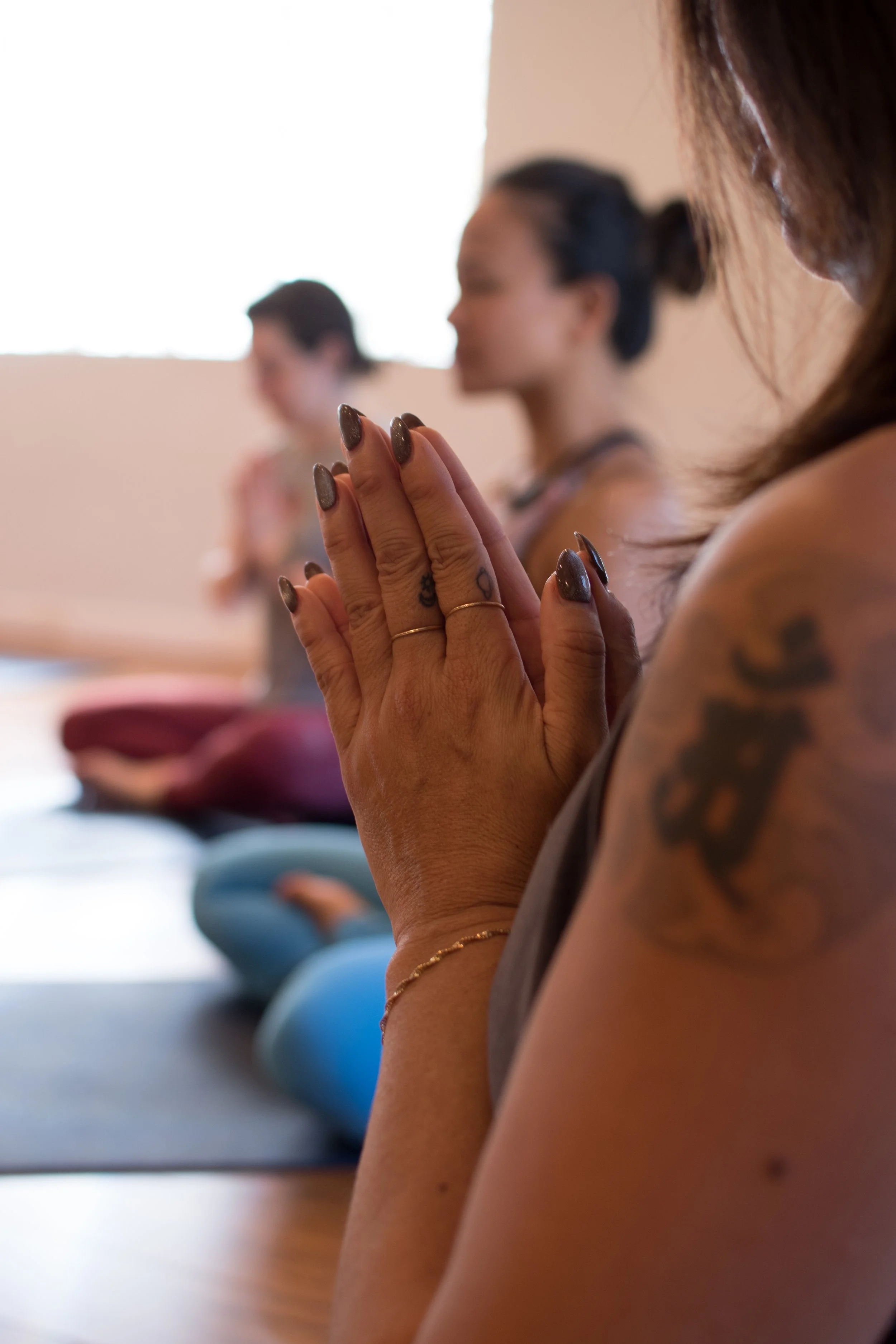
Yogis seated in a cross-legged form with palms together and fingers pointing up, a hand form that invites an open heart, called anjali mudra.
Photo Credit: Full Moon Photography
We were hit with a massive storm, with nearly 20 inches of precipitation. If it had all been snow, maybe we’d be in better shape. But it wasn’t. It was snow, sleet, and freezing rain layered on top of each other, then locked in place by unexpected and relentless subfreezing temperatures. What fell from the sky didn’t melt. It hardened. Roads turned to ice. Sidewalks became dangerous. The cold lingered longer than anyone expected.
And in the middle of all of that, this story somehow became even more powerful.
Because while many of us were hunkering down, trying to stay warm and safe, a group of monks kept walking.
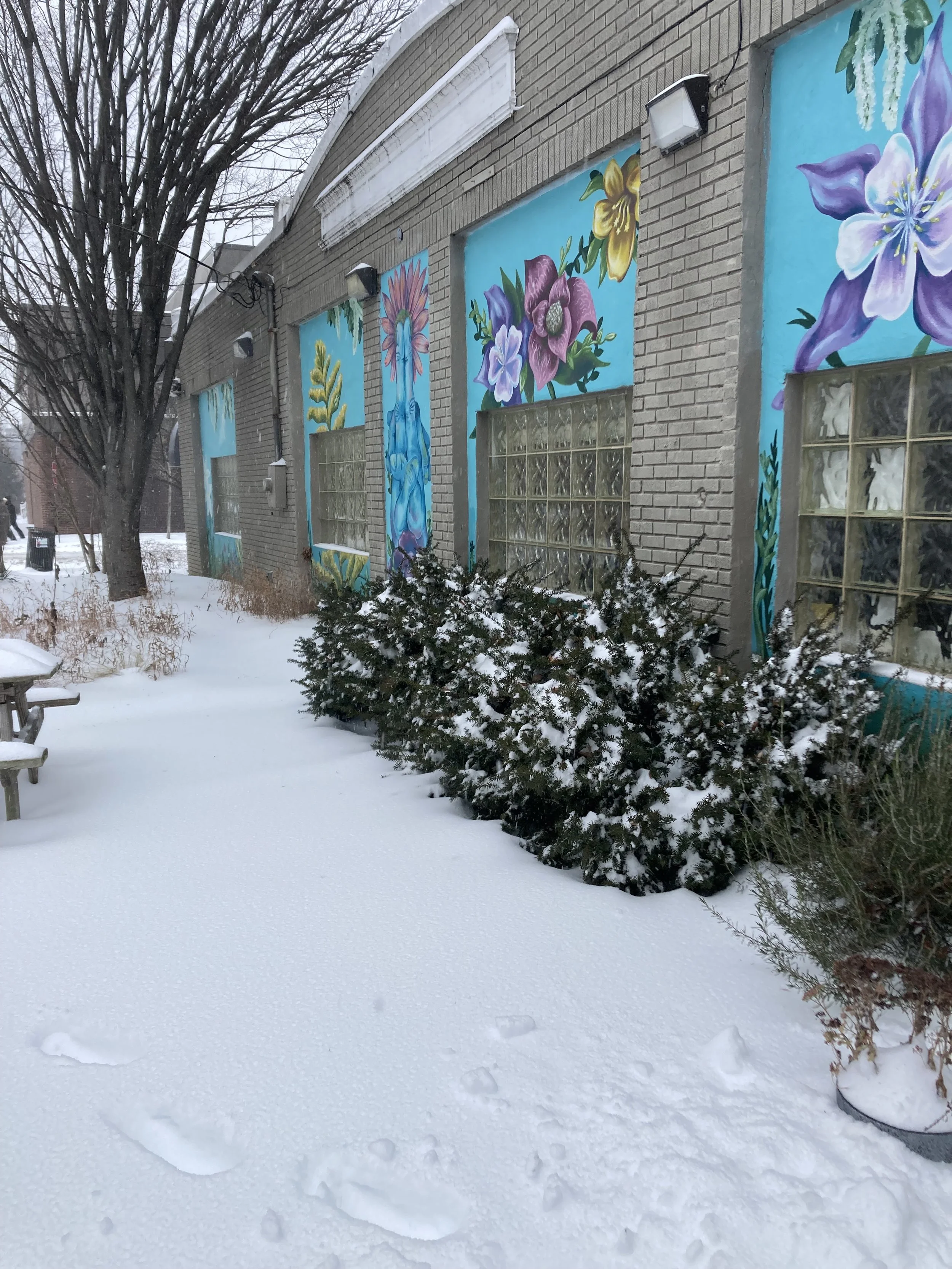
A snowy garden scene after our late January storm outside the studio.
They began in Texas and are making a 2,300-mile pilgrimage to Washington, DC. They left the safety of their home, their familiar walls, to carry a message through the simple, radical act of walking.
They are on track to arrive in DC on the 108th day of their journey.
They come from a Vietnamese Buddhist tradition rooted in mindfulness, loving-kindness, and compassion. Their walk is silent and non-political. Their purpose is both simple and profound: to cultivate peace within themselves and offer it outward to everyone they meet.
Some walked barefoot before the winter storm.
Some use canes.
Some were injured on the road and had to stop for their health.
And yet, almost all who began the journey continue.
They walk into the unknown, never certain how they’ll be received. It has not always been welcoming for them. They were camping in tents but as the weather has gotten drastically colder, Buddhist centers and churches have opened their doors to offer a warm space to rest, eat and meet countless people. Local volunteers and local law enforcement officers have helped clear the path for them to continue walking eastward.
They don’t ask for anything. In fact, they’ve asked people to stop offering supplies because they can’t carry more and their small support car is already full.
And still, people come.
Strangers drive across state lines just to stand at a roadside marker and watch them pass. People gather who might never otherwise meet. Some stay only for a moment and leave changed by the simple act of being present. Some are quietly blessed as they wait. There are stories of inner shifts, of something softening, opening, remembering.
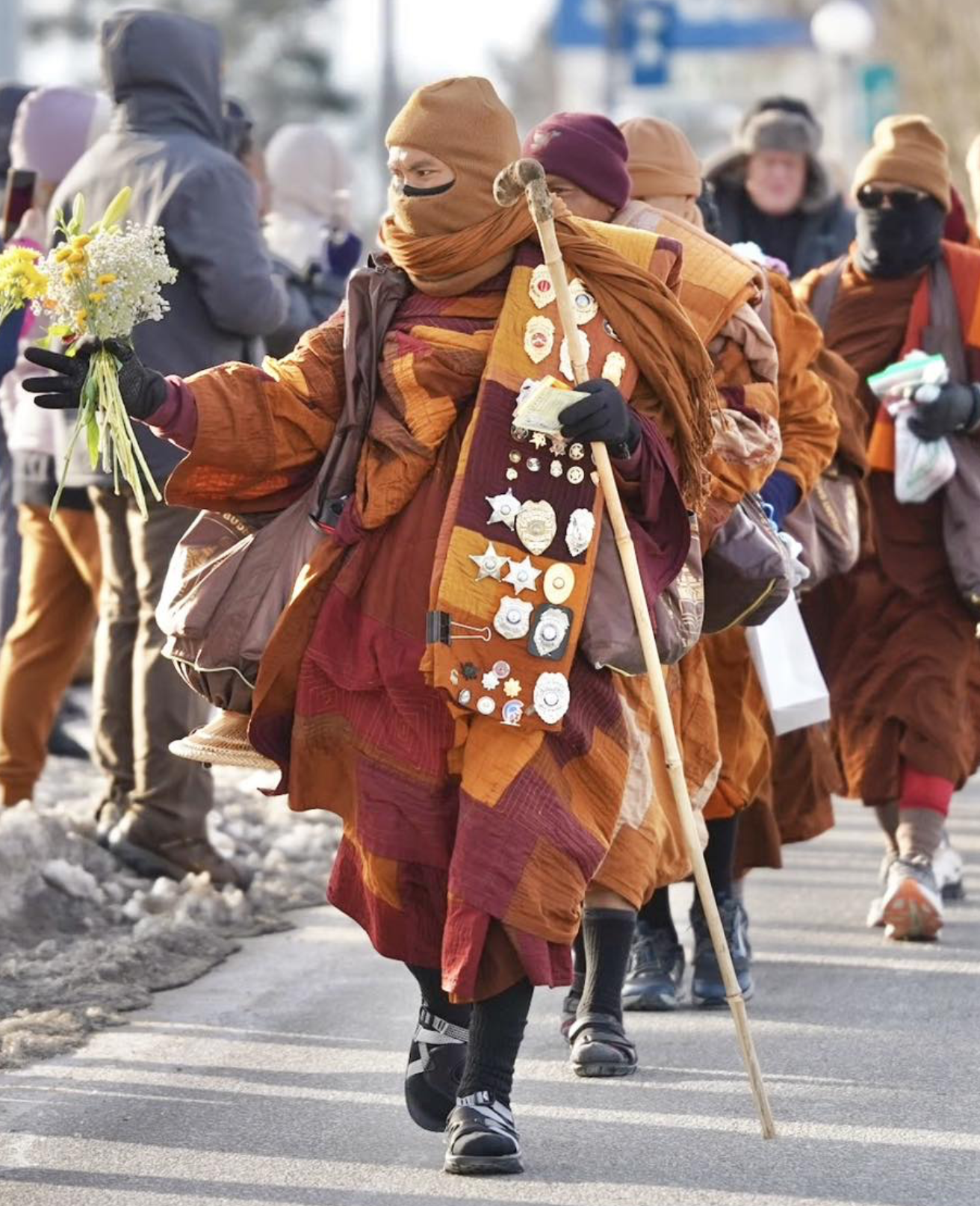
Day 101 Photo from @walkforpeace.usa via Instagram. Venerable monks walking in Virginia, greeting a line of people on the side of the road.
We may never know the full impact of this walk on those who witness it in person, or on those of us who hear about it from afar.
But here I am, sitting inside the walls of our small yoga studio in Northeast DC, realizing something:
What looks small can carry enormous force.
A handful of monks walking in silence is gathering people who may never have come together before. They are giving us a living example of what it means to be brave through action. They are moving hearts without big speeches. They are creating connection without demands. They are offering something that doesn’t shout, but changes the room when it enters.
This is what power looks like when it’s rooted in peace.
Power that grows from mindfulness.
Power that moves through loving-kindness and compassion.
Power that doesn’t conquer. It transforms.
And it brings me back to us.
To this practice.
To these quiet moments on our mats.
To this space or any space that we can cultivate our peace.
Because what is yoga for, if not an opportunity to still the mind from distraction, to listen to yourself without doubt, without judgment, and without the world’s overwhelming noise shaping your thoughts before they become actions?
On the mat, we practice clearing space.
We practice presence.
We practice choosing where our attention goes.
And from that clarity, action becomes more intentional.
More grounded.
More aligned.
Maybe yoga isn’t separate from what the world needs right now.
Maybe it’s training for it.
So I’m left with a gentle but urgent question, for myself, and for you:
What is your action?
How are you cultivating peace within yourself?
How are you carrying it into your conversations, your choices, your communities, your everyday encounters?
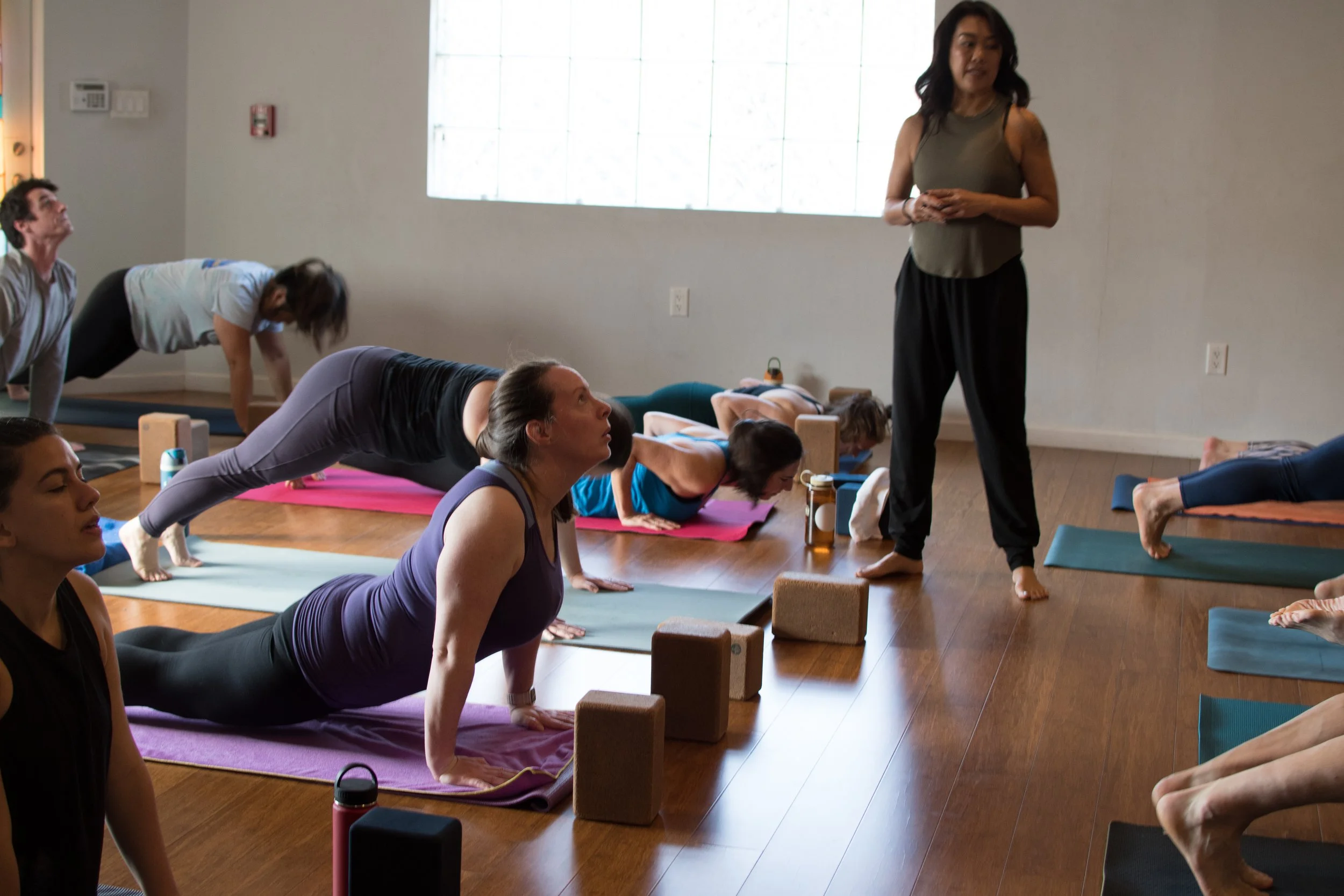
BSY class with Mana Takai, instructing a room of students.
Photo Credit: Full Moon Photography
Peace is not passive.
Peace is not small.
Peace is power.
And it starts closer than we think.
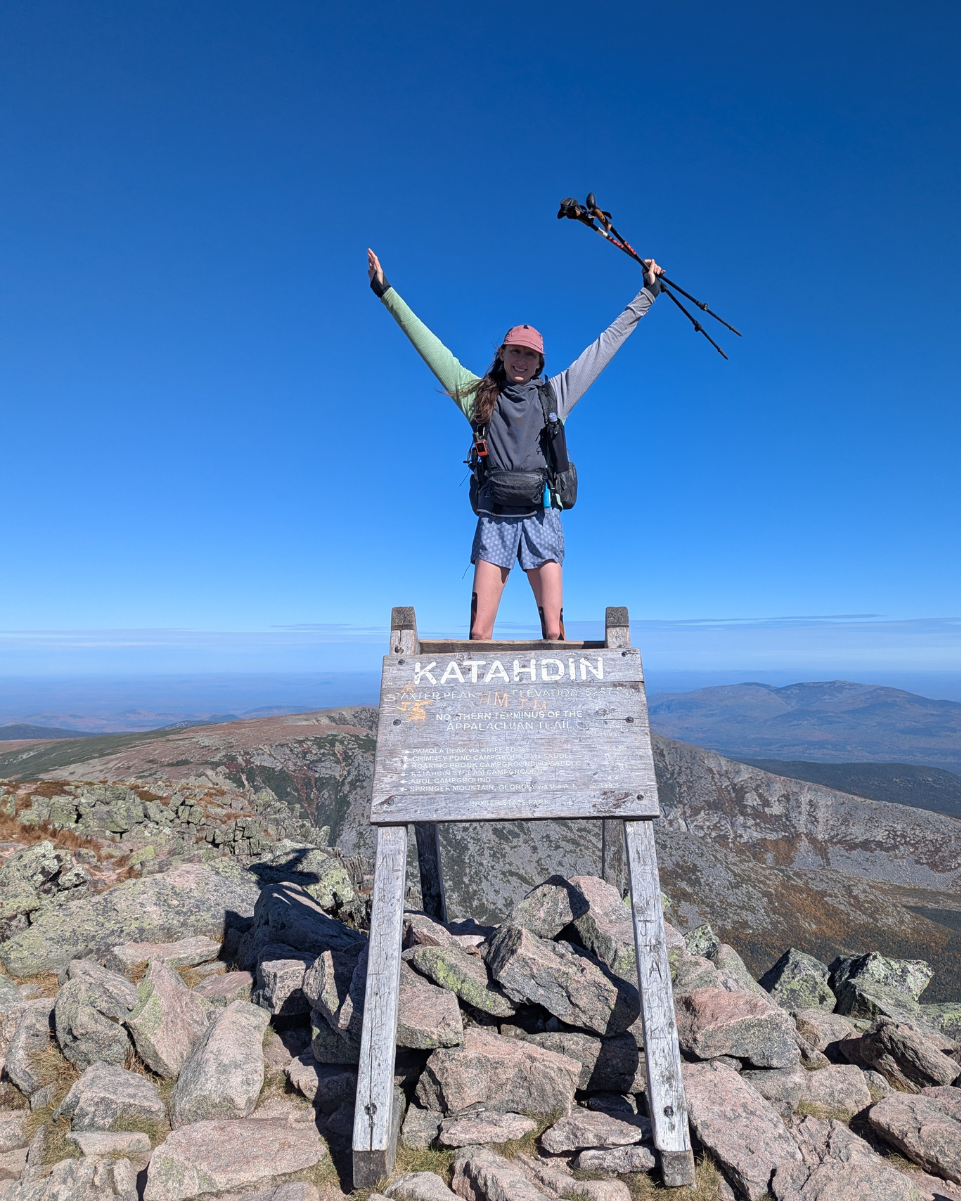
Beyond the Mat: A Six-Month Hike on the Appalachian Trail
January 15, 2026, written in collaboration with Nicole Ryan
This is Nicole- a Bluebird Sky Yoga member, a dedicated Mysore yogi, and someone who quietly inspired us to want to know more about what it truly means to walk the Appalachian Trail for six months. When Nicole returned home to DC, the transition was not the relief many might expect. Ordinary places felt overwhelming, even walking into CVS flooded her senses. Sleeping in her own bed felt strangely claustrophobic, not because she hadn’t slept indoors on the trail, but because now, indoors felt permanent. The trail had given her space, movement, and simplicity, and returning required a new kind of resilience: learning how to heal while still honoring her body’s need to move.
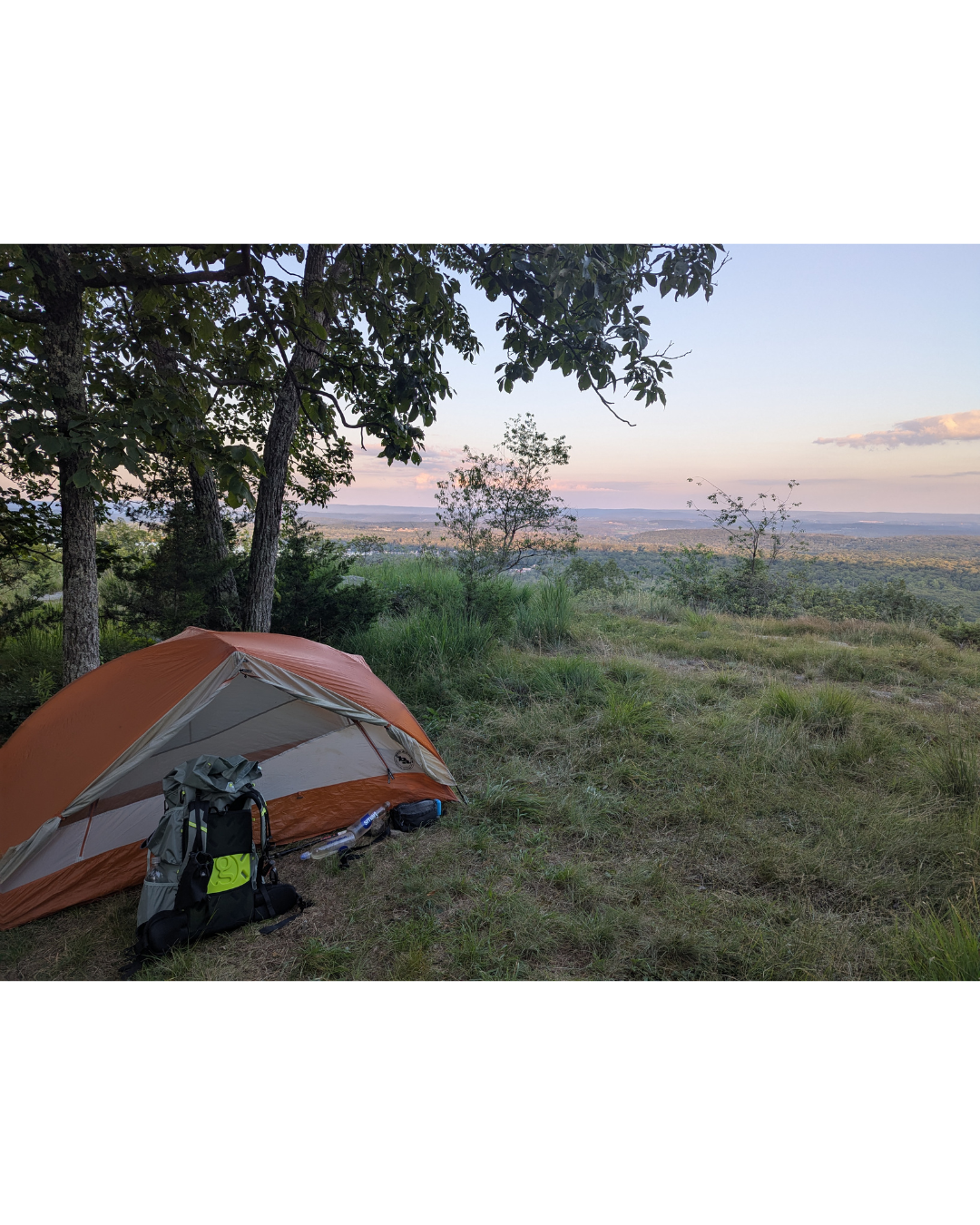
The trail reshaped Nicole in unexpected ways, especially in how she learned to receive kindness. Sometimes called “trail magic”, the act of strangers offering food, rides, warmth, and care, became essential to survival, not just comfort. One night in northern Georgia, after mailing home her warm sleeping bag during an earlier heat wave, temperatures dropped below freezing and rain poured relentlessly. She shivered through the night in a shelter, unsure if her body could safely endure another. The next morning, a father and son she’d just met offered to walk seven miles with her to their car and drive her to a hostel. That single, chance encounter meant warmth, rest, and the ability to upgrade her gear, and continue. Accepting help from strangers was not her instinct, but it became one of the most transformative lessons of the journey.
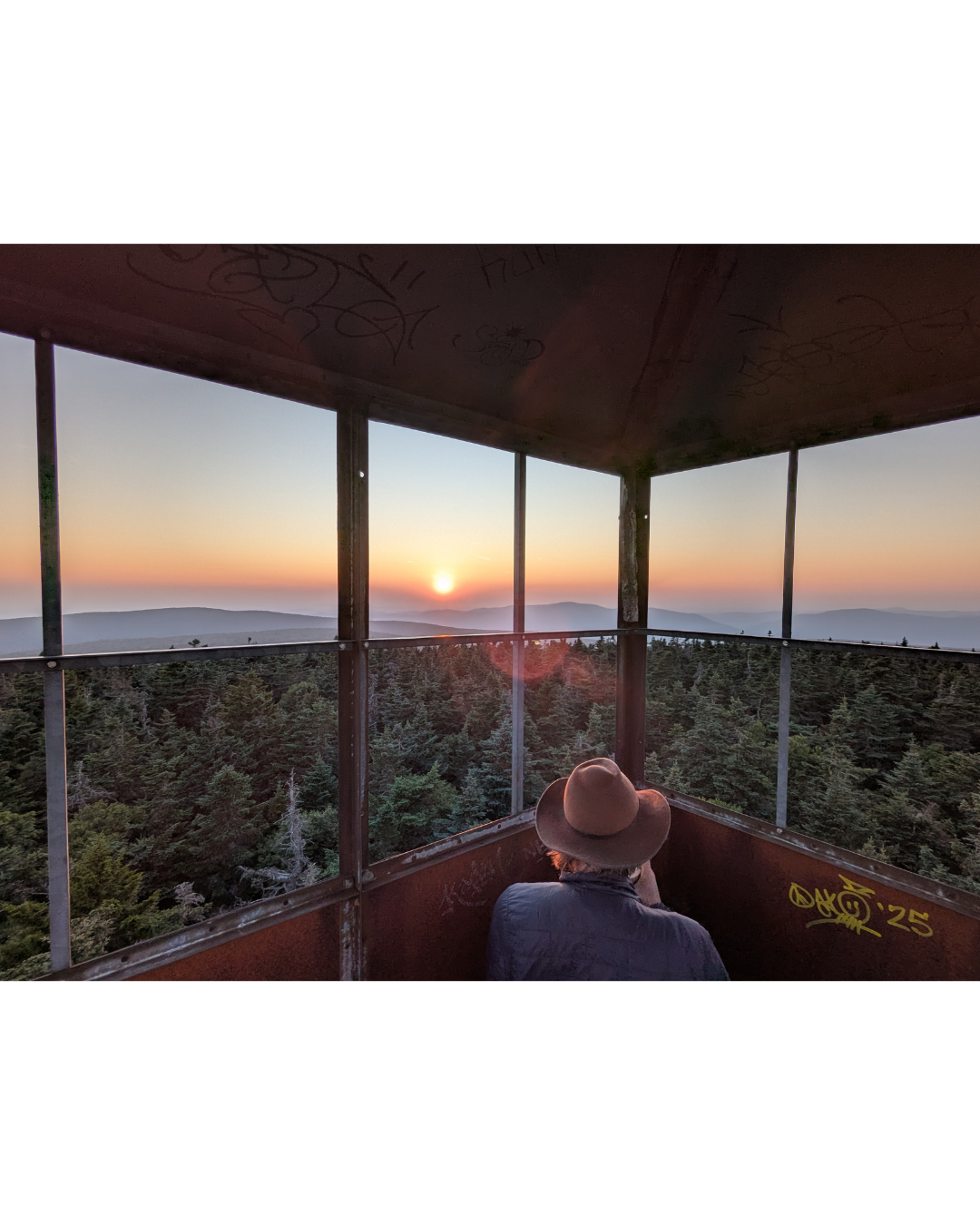
Alone with her thoughts day after day, Nicole discovered that solitude wasn’t always filled with fear or heaviness. Sometimes her mind was occupied with simple questions- what order to set up camp, where to stop next, how much water she needed. Other times, gratitude rose naturally. Anxiety about storms, injuries, staying warm, or hiking alone was still present, but without constant distraction, she learned she didn’t always need to escape those thoughts. Yoga teachings followed her down the trail: everything is temporary, be comfortable in discomfort. These mantras carried her through weeks of relentless rain, when morale wears thin and every mile feels earned. Years of yoga practice also helped her distinguish between pain and discomfort, a skill that mattered when every day depended on listening carefully to her body.
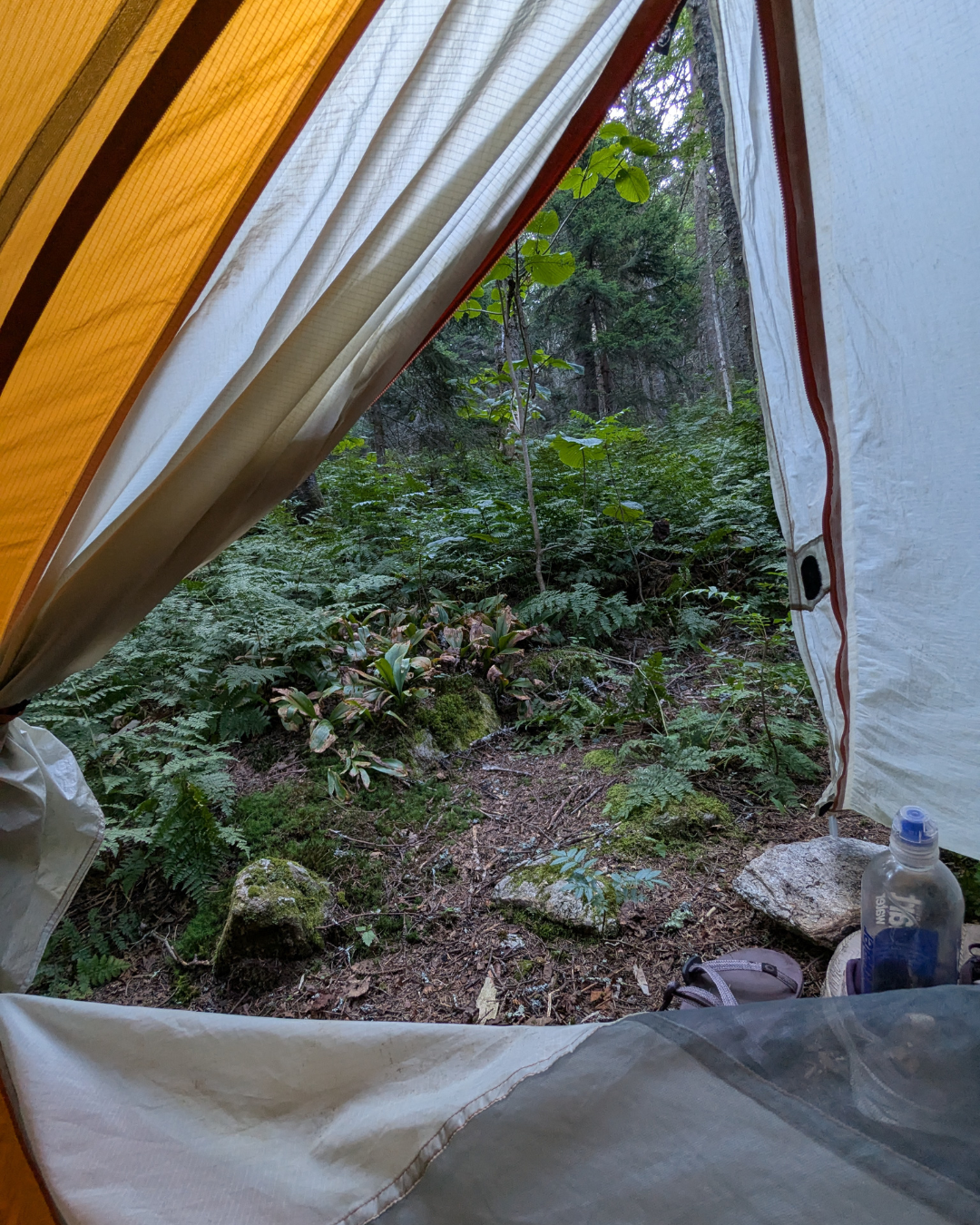
Movement became ritual. Nicole stretched each morning and night in her tent, often for less than ten minutes, but enough to keep her body going. She planned mileage each evening by headlamp, studied her map instead of social media, journaled to remember the journey, and set timers for breaks so she could fully rest without worry. Over time, fear softened. Sleeping alone became familiar. Bears became recognizable by sound. Strangely, the farther she was from towns and roads, the safer she felt. Awe, however, never faded- fall leaves igniting the forest, moss and mushrooms glowing with quiet color, fog rolling over the White Mountains in New Hampshire, stars reflected in Maine’s lakes, baby bears in the Smoky Mountains, and the constant presence of people united by love for the trail.
Now back at Bluebird Sky Yoga, Nicole’s practice feels different. Her body has changed. Poses that once felt easy can feel out of reach, but her patience has grown. She’s less frustrated, more forgiving, deeply appreciative of what her body carried her through: heat, cold, endless miles, and the simple act of standing up every morning and walking again. She’s most excited to return to the community- the Mysore potlucks, art shows, and small moments of connection that make a place feel like home. And in a final, unexpected twist, near the end of the trail Nicole discovered something new entirely: a love for running and flying downhill on dirt paths, feeling light again. A reminder that resilience, chance encounters, and showing up day after day don’t just change us, they sometimes lead us somewhere we never planned to go.
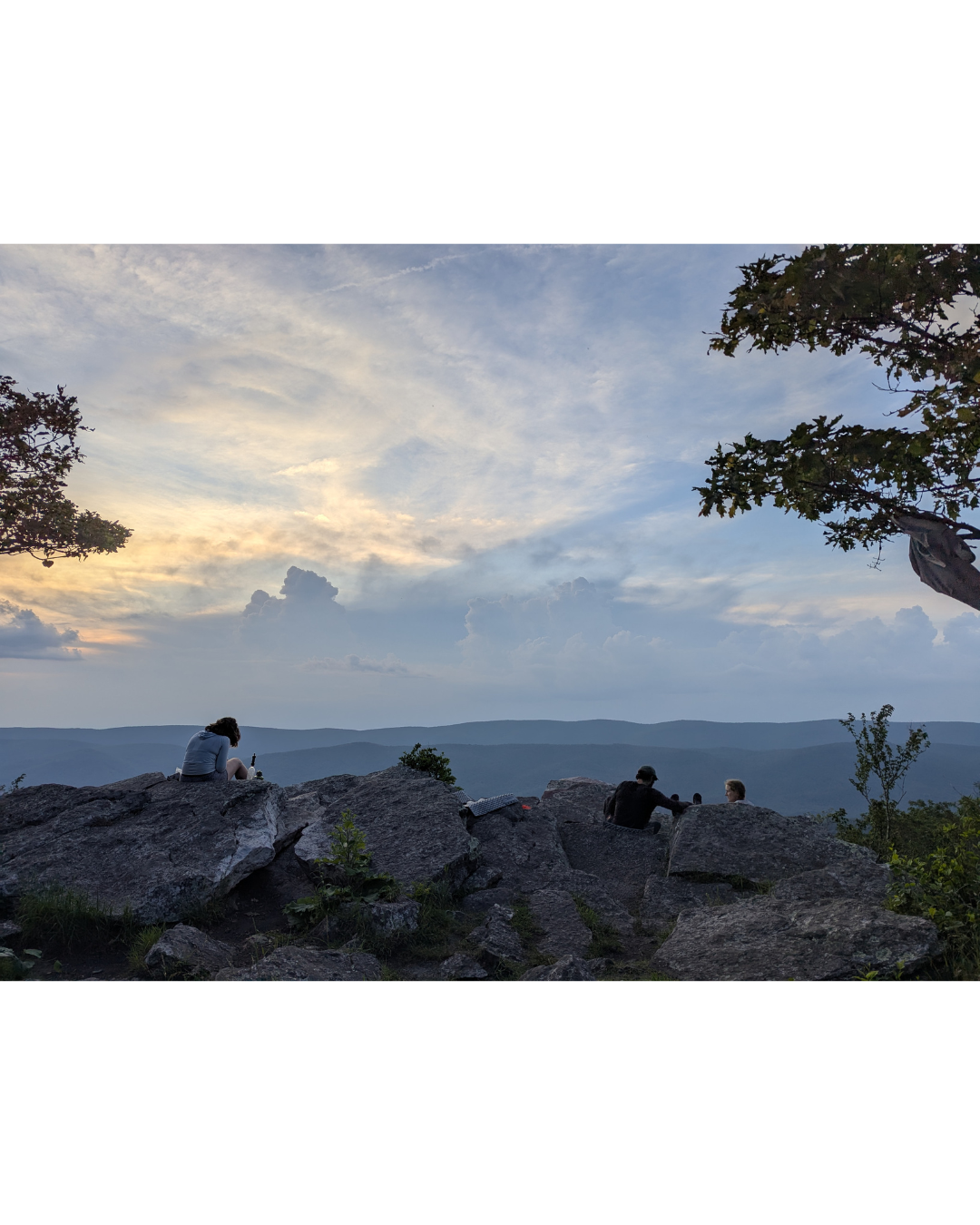
We practice yoga to become comfortable in discomfort, to notice what’s temporary, and to remember that we don’t have to do everything alone. Nicole’s story shows how these teachings live far beyond the mat- shaping how we move through uncertainty, community, and everyday life. We invite you to come practice, connect, and be part of the community that continues to hold stories like Nicole’s, on and off the mat.